

News
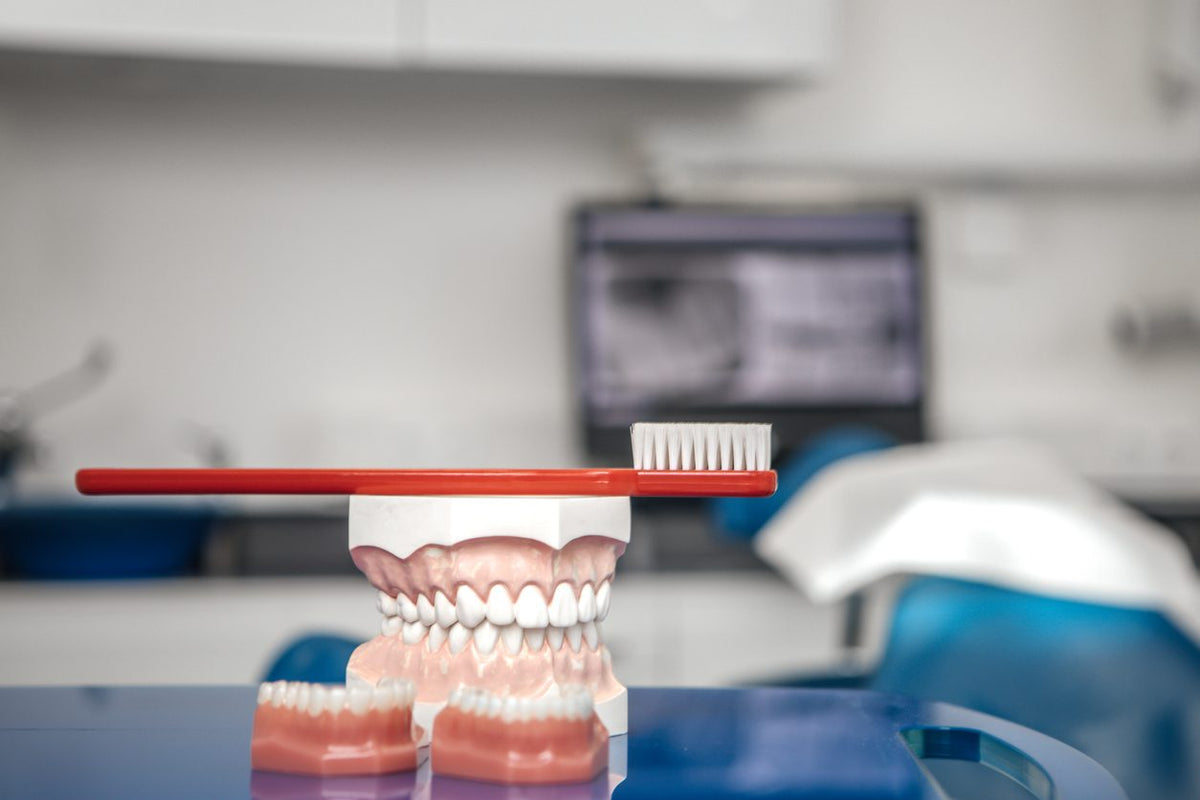

3D Printing Improves Patient Dental Experiences
Ushering in a New Era of Dental Care In recent years, the field of dentistry has seen a remarkable transformation, thanks to the integration of digital technologies and 3D printing. These advancements are not only revolutionizing the way dental professionals work but also significantly improving patient experiences. Gone are the days of traditional, time-consuming, and often uncomfortable procedures. Instead, digital dentistry and 3D printing are bringing efficiency, precision, and patient-centric care to the forefront of oral healthcare. In this blog post, we'll explore how these innovations are enhancing patient experiences in the world of dentistry Precision and Customization Precision and customization are paramount in modern dentistry, and the integration of digital technologies, particularly 3D printing, has revolutionized these aspects of dental care. One of the standout advantages of this technological leap is the unparalleled precision achieved through 3D scanning. Traditional methods often involve messy and uncomfortable impressions, which can be eliminated with the use of 3D scanners. These devices allow dentists to capture highly accurate digital impressions of a patient's oral anatomy, providing a comprehensive and detailed representation. Once the digital impressions are obtained, dentists can leverage 3D printing technology to manufacture customized dental solutions. This level of customization is a game-changer in designing treatment plans that suit each patient's unique needs. From crowns and bridges to orthodontic appliances, the entire spectrum of dental prosthetics and devices can be precisely tailored based on the individual's oral structure. This departure from one-size-fits-all approaches ensures not only a perfect fit but also addresses specific dental issues with greater efficacy. The result is a paradigm shift towards a more personalized approach to dental care. Patients benefit from treatments that are meticulously crafted to match their anatomy, reducing discomfort and enhancing overall satisfaction. Faster Turnaround Times The incorporation of 3D printing technology into dentistry has significantly transformed the traditional model of lengthy and time-consuming procedures, offering a remarkable improvement in the turnaround time for dental treatments. In conventional dental practices, patients often had to endure multiple visits and endure extended waiting periods, especially when laboratory work was involved. The advent of digital dentistry, coupled with in-house 3D printing capabilities, has revolutionized this landscape. With the ability to harness 3D printing directly within the dental practice, the need for outsourcing to external laboratories is minimized. This not only expedites the entire treatment process but also allows for on-site creation of various dental restorations and appliances. The impact is particularly noticeable in the realm of prosthetics like crowns, where patients previously had to wait for days or even weeks for the creation and delivery of their customized dental appliances. The efficiency gains are striking – now, patients can witness the fabrication of their dental prosthetics within a matter of hours rather than enduring prolonged waiting times. This rapid turnaround time is a significant advantage for both dental practitioners and their patients, offering a more convenient and streamlined experience. Improved Communication The utilization of 3D printers goes beyond the realms of precision and treatment efficiency—it significantly elevates the communication dynamic between patients and dental professionals. The introduction of digital tools and 3D models serves as a transformative means for dentists to convey complex information to their patients in a comprehensible and engaging manner. By harnessing 3D printing technology, dentists can generate highly detailed and accurate physical models of a patient's oral anatomy. These 3D models become invaluable visual aids during consultations, enabling dentists to elucidate treatment options and articulate expected outcomes with unprecedented clarity. Instead of relying solely on verbal descriptions or two-dimensional images, patients can now interact with tangible, three-dimensional representations of their dental conditions. Furthermore, digital tools facilitate the creation of virtual treatment simulations. Dentists can visually walk patients through various treatment scenarios, showcasing potential outcomes and allowing patients to better grasp the implications of each option. This interactive and visual approach empowers patients to make informed decisions about their dental care, fostering a sense of engagement and participation in the decision-making process. Minimized Discomfort One remarkable aspect of this technological transformation is the substantial reduction in discomfort experienced by patients undergoing dental procedures. Traditionally anxiety-inducing processes, such as taking impressions, have undergone a remarkable shift towards a more comfortable and less invasive experience.In the past, patients often had to contend with gooey molds and uncomfortable trays during traditional impression-taking procedures. The discomfort associated with these methods could contribute to heightened anxiety among patients. However, with the introduction of 3D printing, this aspect of dental care has undergone a paradigm shift. Digital scans, facilitated by advanced 3D scanning technology, have emerged as a quick and precise alternative to traditional impressions. The efficiency of digital scans, coupled with the precision afforded by 3D printing technology, not only reduces the time patients spend in the dental chair but also minimizes potential sources of stress and discomfort. Comprehensive Treatment Planning The integration of digital dentistry, with the support of 3D printing technology, marks a significant advancement in comprehensive treatment planning. One of the standout features of this approach is the ability to create and utilize digital records that chronicle a patient's oral health journey over time. These digital records serve as a dynamic and detailed repository, enabling dentists to track changes in a patient's oral health with precision and accuracy. Dentists can utilize 3D printing to create physical models based on the digital records, offering a tangible representation of the patient's oral anatomy. This aids in in-depth analysis, facilitating a thorough examination of the spatial relationships within the oral cavity. The three-dimensional models enable dentists to visualize potential issues more accurately and plan interventions with a higher degree of precision. By leveraging the capabilities of digital dentistry and 3D printing, comprehensive treatment planning becomes a cornerstone in enhancing the overall patient experience, promoting oral health longevity, and ensuring a more targeted and effective approach to dental care. Digital dentistry and 3D printing have ushered in a new era of patient-centered dental care. With their precision, speed, and patient-friendly procedures, these technologies are not only improving the quality of treatments but also enhancing the overall patient experience. Patients can expect tailored, comfortable, and efficient dental care, resulting in better oral health outcomes and greater satisfaction. As these technologies continue to advance, the future of dentistry holds even more promise for improved patient experiences.
Learn more
How 3D Printing is Changing the Dental Industry
Benefits and Techniques Used With Additive Manufacturing in Dentistry 3D printing, also known as additive manufacturing, has been revolutionizing various industries, and the dental industry is no exception. The utilization of 3D printing technology in dentistry has brought about significant advancements, transforming the way dental professionals approach patient care, treatment planning, and the production of dental prosthetics. It is now possible to get an accurate 3D model of the patient’s dentition, leading to 3D dental restoration, with solutions totally adapted to the patient. Having a 3D printer in a dental practice holds immense value for dentists and their patients. It provides the dentist with greater control and flexibility over treatment planning and production processes. With a 3D printer, dentists can create accurate and customized dental models, surgical guides, and prosthetics in-house, reducing the reliance on external dental laboratories and minimizing turnaround times. This leads to improved efficiency and patient satisfaction. Additionally, the ability to produce personalized dental solutions using 3D printing technology enhances the dentist's ability to meet individual patient needs, resulting in better-fitting restorations, increased comfort, and improved treatment outcomes. This article will examine some key ways in which 3D printing is changing the dental industry, as well as some of the techniques that are crucial to this advancement in technology. Benefits of 3D Printing in Dentistry Improved Precision and Accuracy 3D printing enables dental professionals to create highly precise and accurate dental models, prosthetics, and appliances. Traditional methods often involve manual labor and potential human errors. With 3D printing, digital scans can be converted into precise physical models with intricate details, resulting in better-fitting restorations and increased patient satisfaction. It is also possible to 3D print surgical devices and tools to aid in dental procedures with accuracy and precision. Faster Turnaround Times Traditional dental prosthetic manufacturing methods can be time-consuming and require multiple steps, involving outsourcing to dental laboratories. 3D printing allows for in-house production, reducing turnaround times significantly. Dental offices equipped with 3D printers can produce dental models, surgical guides, aligners, and crowns on-site, resulting in faster treatment planning and delivery. Customization and Personalization Every patient's dental structure is unique, and 3D printing enables the creation of highly customized dental solutions. Dental professionals can design and fabricate dental prosthetics tailored to the individual needs of each patient. From aligners and dental crowns to bridges and dentures, 3D printing allows for personalized treatment options that improve comfort, functionality, and aesthetics. One of the most common applications of 3D printing in dentistry is customized crowns. It is possible to get a scan of the patient’s teeth, to model it and to directly print the crown. This process is really time-saving, and the professional can modify and reprint the crown if there is a mistake. Enhanced Patient Communication 3D printing technology enhances patient communication and engagement. Dental professionals can use 3D-printed models to visually explain treatment plans, demonstrating the expected outcomes and involving patients in the decision-making process. This visual aid improves patient understanding, leading to better treatment acceptance and improved overall dental experience. Cost-effectiveness While the initial investment in 3D printing equipment and materials may seem high, the long-term benefits can outweigh the costs. In-house 3D printing reduces outsourcing expenses, eliminates shipping delays, and allows for more efficient use of resources. Additionally, the ability to create accurate dental models and prosthetics in-house can minimize the need for expensive remakes or adjustments. Advances in Implant Dentistry The integration of 3D printing technology has brought remarkable advances to implant dentistry, revolutionizing the entire treatment process. One significant advancement is the creation of precise and patient-specific surgical guides through 3D printing. By converting digital scans into physical guides, dentists can ensure accurate implant placement, minimizing surgical complications and optimizing outcomes. 3D printing also enables the production of customized implant components, such as abutments and frameworks, tailored to the unique anatomy of each patient. This level of customization improves the fit, functionality, and aesthetics of the final restorations. Additionally, 3D printing allows for rapid prototyping and iterative design modifications, facilitating efficient and cost-effective research and development of new implant designs and materials. Moreover, the ability to manufacture these components in-house reduces dependence on external suppliers, enhances workflow efficiency, and provides greater control over the treatment timeline. Research and Development 3D printing has opened up new avenues for research and development in the dental field. Researchers can use 3D printing technology to create prototypes, test new materials, and explore innovative techniques. This facilitates advancements in dental materials, manufacturing processes, and treatment methodologies, leading to improved patient care and outcomes. 3D printing is transforming the dental industry by providing enhanced precision, faster production times, customization, improved patient communication, cost-effectiveness, and advancements in implant dentistry. As this technology continues to evolve, it is likely to further revolutionize dental practices, improving treatment outcomes, and reshaping the future of dental care. 3D Printing Techniques in Dentistry In the dental industry, several 3D printing techniques can be employed to fabricate various dental components and devices. Some of the commonly used 3D printing techniques in dentistry include: Stereolithography (SLA) utilizes a liquid resin that solidifies when exposed to a specific wavelength of light. A UV laser selectively cures the resin layer by layer, creating a 3D object. SLA is often used to produce highly detailed dental models, surgical guides, aligners, and temporary restorations. Digital Light Processing (DLP) is similar to SLA but uses a digital projector to cure the resin instead of a laser. The projector displays the entire layer at once, allowing for faster printing speeds compared to SLA. DLP is commonly used for the production of dental models, surgical guides, and orthodontic appliances. Selective Laser Sintering (SLS) involves the use of a laser to selectively fuse powdered material, typically a biocompatible polymer, to create solid 3D objects. SLS is often employed for the production of denture bases, surgical guides, and temporary crowns. Fused Deposition Modeling (FDM) is one of the most widely used 3D printing techniques. It involves extruding thermoplastic filaments layer by layer to build the desired object. In dentistry, FDM is often utilized for the production of study models, orthodontic models, and surgical guides. PolyJet Technology uses a print head to jet and cure droplets of liquid photopolymer onto a build platform. It can produce highly detailed and accurate models by jetting multiple materials simultaneously. PolyJet technology is used in dentistry for creating dental models, wax-ups, and clear aligner templates. Binder Jetting is a 3D printing technique that involves depositing a binding agent onto powdered material, layer by layer, to create a solid object. In the dental field, binder jetting can be used to produce dental models, wax patterns for casting, and removable partial denture frameworks. These 3D printing techniques offer dental professionals a range of options for fabricating dental models, surgical guides, orthodontic appliances, temporary restorations, and other dental prosthetics. The choice of technique depends on factors such as desired accuracy, speed, material properties, and the specific application within the dental workflow. A 3D printer empowers dentists to deliver more efficient, personalized, and patient-centered care while streamlining their workflow and enhancing the overall dental experience. It provides them with greater control and autonomy over the treatment process. The ability to fabricate personalized dental solutions using a 3D printer enables dentists to cater to the unique needs of each patient. Nota3D provides comprehensive point-of-care solutions, including software, 3D printers, and materials that seamlessly integrate into your healthcare workflow. Buying software, printers, and materials from a single source gives you peace of mind and guarantees that everything works well together. Patient-specific guides and models Segment and design models easily End-to-end control of the process Manufacture in-house Thanks to advances in dental 3D printing technology, it’s now easier than ever to start printing parts. We specialize in helping you identify opportunities for in-house 3D printing and connecting you with the best technology and support to ensure it’s a success for you. Nota3D offers experience you can count on. 3D Systems has leveraged its 30 years of 3D printing experience with the leading biocompatible dental 3D printing materials developer to deliver the NextDent 5100 solution. This complete solution represents industry-defining materials and print innovation, dental domain expertise, and regulatory compliance in all major markets to revolutionize your workflow. Contact us, 414-207-4404 or info@nota3d.com, today.
Learn more