

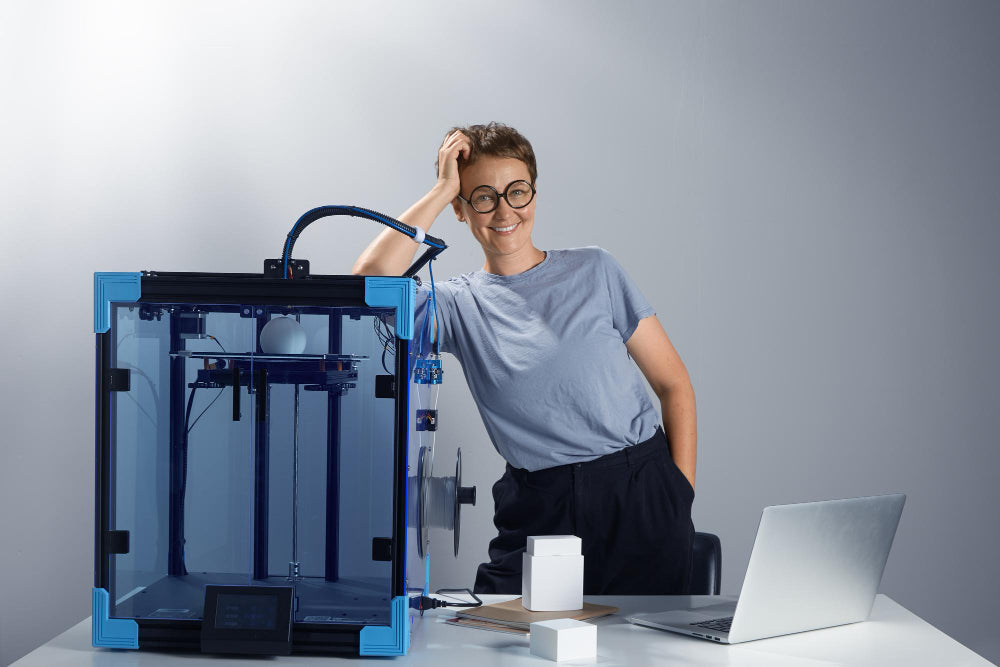
The Markforged Metal X has become one of the most recognizable industrial metal additive manufacturing systems because it simplifies metal production workflows for manufacturers.
Unlike many powder-bed metal systems requiring specialized environments, the Metal X provides a more accessible workflow that allows manufacturers to bring metal production in-house.
How the Metal X Works
The Metal X uses a bound metal filament process. Parts are first printed using metal-filled filament before being washed and sintered into dense metal components.
This workflow significantly reduces the operational complexity associated with traditional metal additive manufacturing systems.

Advantages of the Metal X
Manufacturers choose the Metal X because it offers:
- Easier operation
- Lower safety concerns
- Reduced powder handling
- Lower entry costs
- Excellent tooling applications
The system supports materials including stainless steel, copper, and tool steel.
Manufacturing Applications
Manufacturers use the Metal X for:
- Production tooling
- Replacement parts
- Fixtures
- Low-volume production
- Engineering prototypes
Machine shops increasingly use the system to reduce outsourcing costs and improve manufacturing agility.
Is the Metal X Worth It?
For manufacturers needing flexible low-volume metal production, the Metal X can provide substantial value. The ability to produce metal tooling internally often creates rapid ROI through reduced outsourcing and faster production turnaround.
FAQ Schema Questions & Answers
Can the Markforged Metal X print real metal?
Yes. The Metal X produces real metal components using a bound metal additive manufacturing workflow.
What industries use the Metal X?
Manufacturing, aerospace, automotive, machine shops, and industrial engineering firms commonly use the Metal X.
📚 Read Next: Best 3D Printers for Engineering and Product Development


