

EXT 1070 Titan Pellet
High-speed, large-format industrial 3D printing with a CNC milling option. The EXT 1070 (formerly Titan Atlas 2.5) is a production system built around low-cost thermoplastic pellet feedstocks.
- 1070 × 1070 × 1118 mm build volume
- Up to three toolheads, including a milling spindle
- Available in a taller LT version
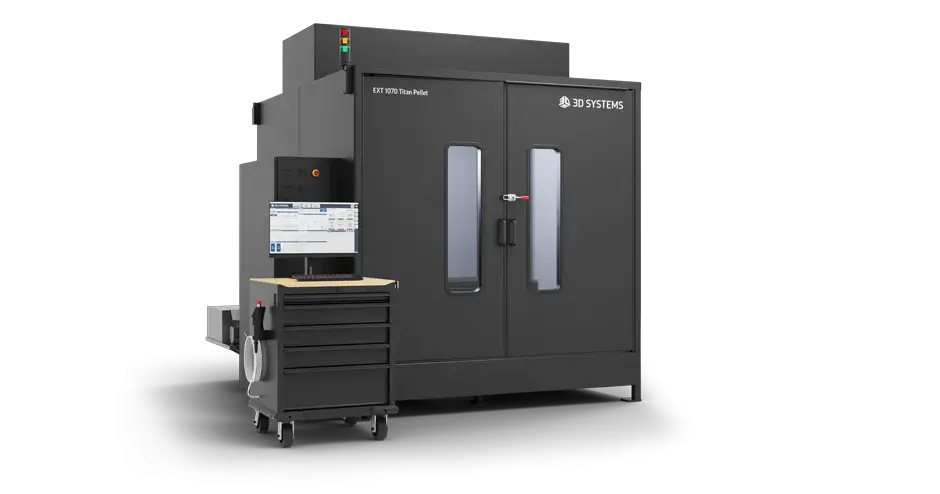
Shorten Lead Times
Pellet extrusion on the EXT 1070 prints up to 10X faster than traditional filament extrusion 3D printing.
Reduce Costs
Affordable thermoplastic pellets cost up to 10X less than traditional filament feedstocks.
Print Full Scale
A 1070 × 1070 × 1118 mm (42 × 42 × 44 in) build volume produces full-scale medium-to-large parts with no gluing pieces together.
Purpose Built. Production Ready.
The EXT 1070 is a proven production additive manufacturing system used across foundry, automotive, aerospace and defense, consumer products and more.
A welded steel frame and an industrial, actively heated enclosure make it ready to produce functional, high-performance parts on the factory floor. The modular toolhead system lets you add a second pellet extruder, filament printing and/or CNC milling at purchase or later.
Two Versions
Choose the standard EXT 1070 for full hybrid capability, or the EXT 1070 LT for extra build height.
EXT 1070 Titan Pellet
- 1070 × 1070 × 1118 mm (42 × 42 × 44 in)
- Cut
- 1041 × 990 × 990 mm (41 × 39 × 39 in)
- Toolheads
- Pellet, dual pellet, filament and spindle options
EXT 1070 Titan Pellet LT
- 1070 × 1070 × 1219 mm (42 × 42 × 48 in)
- Cut
- Not available
- Toolheads
- One pellet extruder plus filament extruders
Configure Your Toolheads
Both versions ship with a single pellet extruder and support up to three toolheads on the gantry.
EXT 1070 Titan Pellet
One Toolhead Standard
- PPellet Extruder
Two Toolheads
- PPDual Pellet Extruders
- PFPellet + Filament Extruder
- PSPellet Extruder + Spindle
Three Toolheads
- PFSPellet + Filament + Spindle
- PPSDual Pellet + Spindle
EXT 1070 Titan Pellet LT
One Toolhead Standard
- PPellet Extruder
Two Toolheads
- PFPellet + Filament Extruder
Three Toolheads
- PFFPellet + Dual Filament
The LT is not compatible with dual pellet or spindle toolhead configurations.
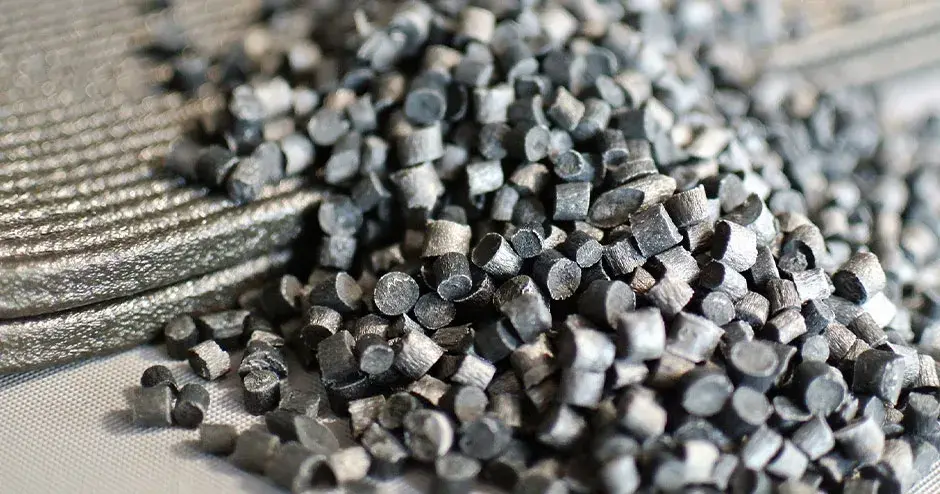
Pellet Extrusion on the EXT 1070
Print a wide range of pellets, from commodity feedstocks to high-temperature, high-performance materials. Direct pellet feeding also makes highly flexible elastomers and high-percentage glass- and carbon-filled materials printable — with up to 10X lower material cost and up to 10X higher deposition rates than filament.
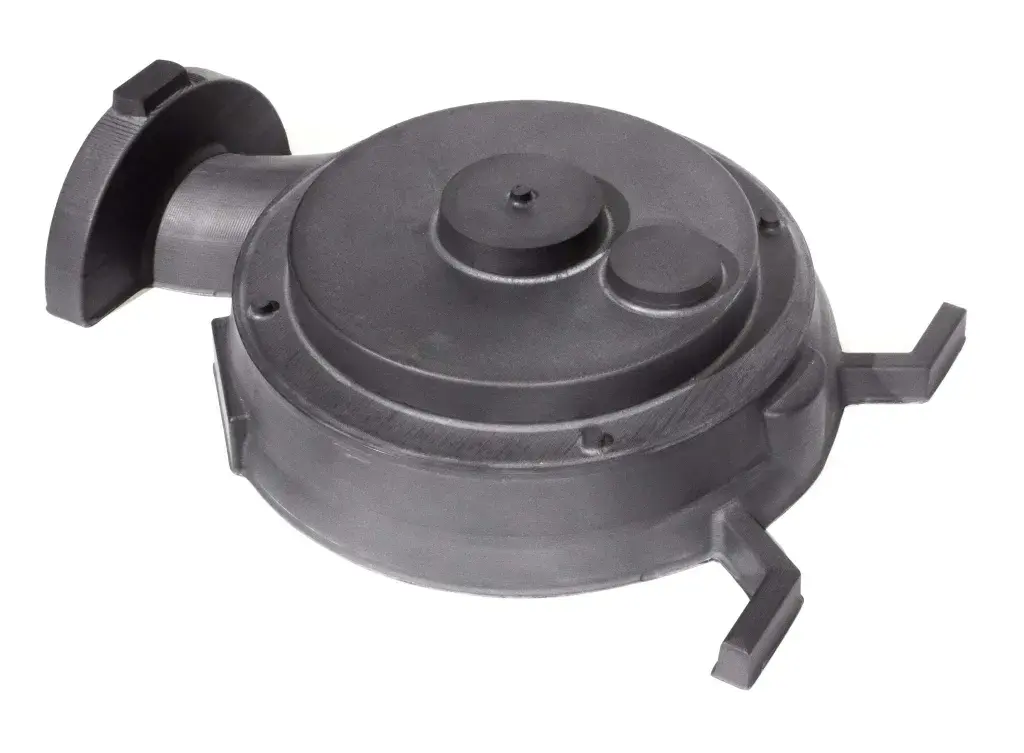
Print and Mill on One Machine
Add a filament extruder or second pellet extruder on the same gantry for high-speed, multi-material printing. The CNC spindle toolhead enables true hybrid manufacturing — machining printed parts both during and after the print.
Pictured: a pump pattern printed with pellet extrusion, then machined on a Titan system.
Production Manufacturing with the EXT 1070
Reliable Production
A CNC controller, closed-loop servos on all axes and remote monitoring increase uptime and reliability.
Built for the Factory Floor
A precision-machined, welded steel frame and an actively heated, insulated enclosure with door interlock suit any production environment.
Open Architecture
Choose from hundreds of open-market pellet grades, and dial in printing and milling parameters for serial production.
EXT 1070 Titan Pellet Specifications
Build Volume
- 1070 × 1070 × 1118 mm (42 × 42 × 44 in)
- Cut
- 1041 × 990 × 990 mm (41 × 39 × 39 in)
- LT Print
- 1070 × 1070 × 1219 mm (42 × 42 × 48 in)
Temperatures
- Pellet Extruder
- 400°C
- Filament Extruder
- 400°C
- Bed
- 140°C
- Enclosure
- 80°C
Spindle (Optional)
- Speed
- 18,000 RPM (1.5 HP)
- Tool Size
- Up to 1/4″ diameter, 4″ length
- Calibration
- 3-axis sensor configuration
Pellet Extrusion
- Nozzles
- 0.6–9.0 mm
- Layer Heights
- 0.4–6.0 mm
- Throughput
- 0.45–13.6 kg (1–30 lb) per hour*
Filament Extrusion (Optional)
- Nozzles
- 0.4–1.2 mm
- Layer Heights
- 0.15–1.0 mm
- Throughput
- <0.45–0.9 kg (<1–2 lb) per hour
Control System
- Motion
- CNC controller
- Drives
- Servos on all axes
- Print Speeds
- Up to 0.5 m/sec
- Slicing
- Simplify3D
System Requirements
- Power Input
- 208V three-phase, 60A
- Machine Weight
- 2041 kg (4500 lb)
- Footprint
- 2.4 × 2.1 × 2.6 m (8 × 7 × 8.6 ft)
*Maximum flow rate with 9 mm nozzle.
Frequently Asked Questions
How many toolheads can the EXT 1070 have?
Up to three. It comes standard with one pellet extruder, with optional configurations adding a second pellet extruder, a milling spindle or a filament extruder. The EXT 1070 LT is limited to one pellet extruder plus filament extruders — dual pellet and spindle configurations aren’t available.
Why print with two different materials in one part?
Pellets are the most affordable 3D printing feedstock, and dual retracting pellet extruders mean you’re no longer limited to filament for multi-material printing. A pellet + filament setup lets you print two materials while choosing the right extrusion method for each. Examples include a high-performance model material with a water-soluble support, or rigid and flexible materials in the same part.
Do I have to use 3D Systems’ materials?
No. The EXT 1070 can use hundreds of pellet grades and dozens of filament materials from the supplier of your choice. 3D Systems can also recommend materials already proven on its systems.
Can you mill a part taller than the spindle’s 100 mm (4 in) reach?
Yes. Print preparation determines how many milling passes are needed based on part height — for example, print 25 mm (1 in), mill it, print another 25 mm, mill again, and so on until the part is complete.
How is the EXT 1070 different from the EXT 800?
The EXT 1070 can print more than 3X as large, and it supports multiple toolheads, while the EXT 800 uses a single pellet extruder.
How is the EXT 1070 different from the EXT 1270?
The main difference is build size. The EXT 1070 prints up to 1070 × 1070 × 1118 mm (42 × 42 × 44 in), while the EXT 1270 prints up to 1270 × 1270 × 1829 mm (50 × 50 × 72 in).
Is training available for the EXT 1070?
Yes. Support covers site preparation for installation plus training before, during and after on-site installation, delivered remotely and in person.

